

 Donate
THE VOICES OF BATIK: A Conversation with Hafida
Since 2025, Hafida has been participating in a goat-raising project in Morocco. Although she initially joined the project to expand her business, she now speaks of changes that go beyond livestock farming: women coming together, helping one another, and gaining confidence.
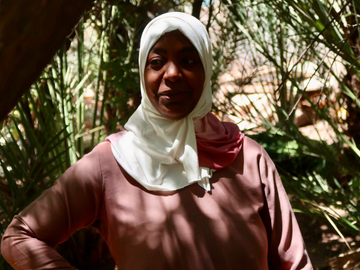
An activity to build independence
Hafida is 40 years old and has four children. She joined the project in 2025 after learning about it from someone in her village. She then benefited goats and joined a group of women involved in goat farming.
Already accustomed to working in the fields andtend to livestock, Hafida is now expanding this work to include goats. In particular, she produces milk, which she consumes with her family.
But as the project progressed, another aspect took on greater importance: the bonds formed among the participants.
Creating spaces to come together
Before the project, the women in the village knew each other but had few opportunities to get together outside of ceremonies and festivals. The gatherings organized as part of the project created new spaces for interaction.
Every two weeks, the participants get together to talk and spend time with each other. For Hafida, these get-togethers have gradually strengthened the bonds between them:
« These meetings bring us much closer together. Every two weeks, you bring us together, and that makes us stronger and more motivated.»
These group sessions also allow women to encourage and support one another. Hafida explains that these meetings inspire them totake on things they hadn’t yet dared to do.
Mutual support that continues every day
This dynamic is reinforced by the mentoring system established within the project. Each participant can turn to another woman for support when she encounters difficulties with raising her livestock.
For Hafida, this opportunity is invaluable: she knows that’she can ask for advice and receive support when she doesn’t know how to handle a situation involving her livestock.
“If I can’t figure out what to do with my livestock, I can definitely go ask my godmother for help.”
« I’m glad I made the right decision"
Beyond the farming aspect, what Hafida remembers most is the collective dynamic thathas developed around the project. She recalls her first meeting with the Rosa association and her decision to join the group. Looking back, she feels she would have « have missed out on everything» if she had refused.
Her testimony thus illustrates an important aspect of thesupport: creating the conditions for women not only to start a business but also to meet one another, share their experiences, and rely on one another.
-----------
ROSA Association
Rosa for Rural Women’s Development, a partner of Elevages sans frontières and now of BATIK Int, has been supporting rural women in the Ouarzazate region since 2005 in achievingeconomic self-sufficiency through sheep and goat farming.
As part of Parions l’égalité 2, the association supports women farmers in consolidating their activities, strengthening their skills, and building their collective power.